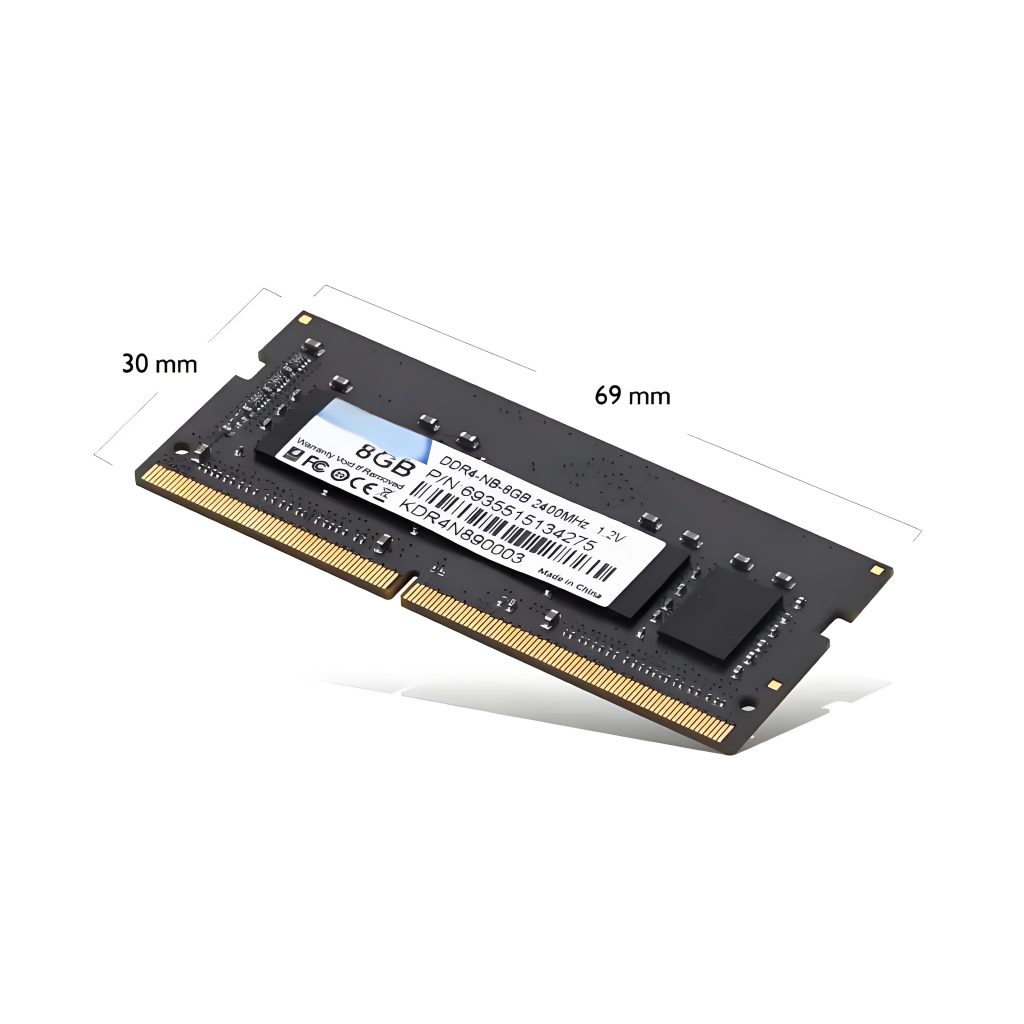
A Generational Leap in Memory Technology
Memory is one of the core components of any computer, directly influencing overall system performance. Since its launch in 2020, DDR5 is steadily replacing DDR4 as the market standard. This guide compares both technologies across multiple dimensions to help you make an informed decision when building or upgrading your system.
1. Core Specifications
DDR4 starts at 2133MHz, with mainstream products ranging from 2666MHz to 3200MHz. DDR5, by contrast, begins at 4800MHz, with high-end modules exceeding 7200MHz. This frequency increase translates directly into greater bandwidth — DDR5 delivers nearly twice the bandwidth of DDR4.
On the voltage side, DDR4 operates at a standard 1.2V, while DDR5 drops to 1.1V. Lower voltage means reduced power consumption and heat output — a significant advantage for laptops and high-density servers.
2. Architectural Innovations
DDR5 introduces a new dual-channel sub-architecture, splitting the 64-bit data bus into two independent 32-bit channels. While each channel is narrower, the combination of higher frequencies results in a net performance gain. Each DDR5 module also integrates its own onboard Power Management IC (PMIC), replacing the motherboard-managed approach in DDR4 for more precise and efficient voltage regulation.
Additionally, DDR5 doubles the Bank Group count from 4 to 8, and increases prefetch bits from 8n to 16n. These low-level architectural improvements give DDR5 a clear edge in multi-threaded workloads and large-scale data transfers.
3. Buying Recommendations
If you’re building a new system, DDR5 is the recommended choice. Intel 12th Gen and later processors, as well as AMD’s AM5 platform, fully support DDR5. While early pricing was steep, costs have fallen significantly, making DDR5 an increasingly practical option.
For users still on a DDR4 platform with sufficient capacity (16GB or more) and speeds at 3200MHz or above, there’s no urgent need to upgrade. DDR4 remains viable for years to come, and in many real-world scenarios, the performance gap is not dramatic.
In summary, DDR5 represents the future of memory technology, while DDR4 remains a practical, cost-effective choice for budget-conscious users backed by a mature and well-supported ecosystem.